
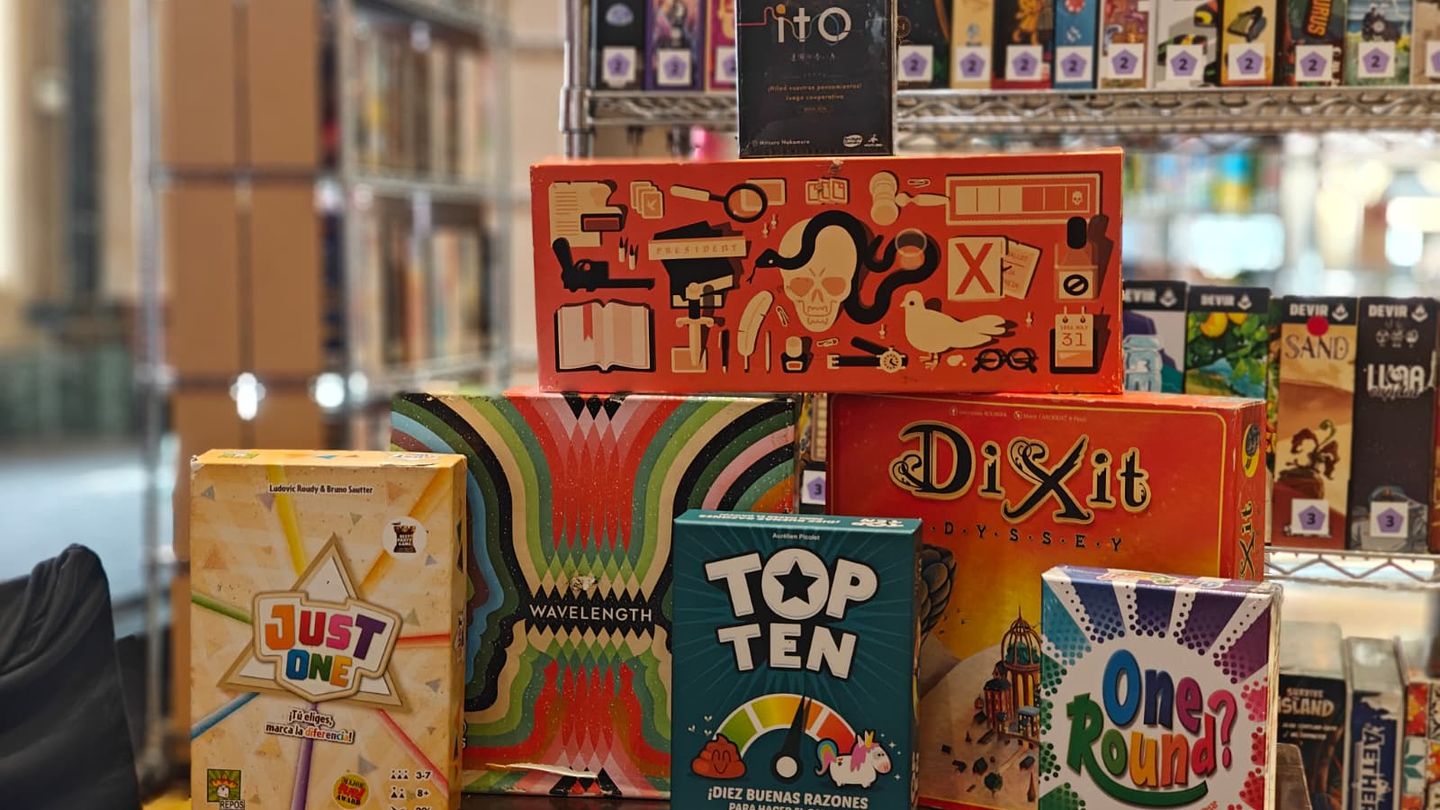
Unmissable Party Games
First of all, do you know what a party game is? A party game is a type of board game designed, above all, for the group: rules that are explained in a couple of minutes, short games lasting between 10 and 30 minutes, and a mechanic that prioritizes interaction, creativity, or humor over complex strategy. You don't need to be a regular gamer to enjoy them, nor do you need to know the other participants beforehand; in fact, these are precisely the type of games that best break the ice in a group that has just met, because everyone starts at the same level and the goal is to have fun, not to win at all costs. They work phenomenally in activities like the Playful Slow Friending that we organize once a month.
That's why party games are the heart of KLEFF's meetups: when people who have never played board games sit at the same table with others who have been in the hobby for years, or when the group mixes several languages (as often happens in our meetups, with neighbors from Barcelona, expats, and Erasmus students), party games are the easiest entry point. They don't require a long explanation, they adapt to groups of 4 to 12 or more players depending on the title, and they almost always generate more laughter and anecdotes than competitive tension. Some are even cooperative, which helps a newly formed group start playing as a team from the first game.
At KLEFF, we have over 670 games in our game library, available to the entire community at our weekly meetups at L'Estació – Espai Gastronòmic, and the eight titles below are some of the party games we most often bring to the table. For each, we indicate its BoardGameGeek listing and, in parentheses, the publisher that releases it in Spain, with a link to their website so you can learn more about them.
Just One
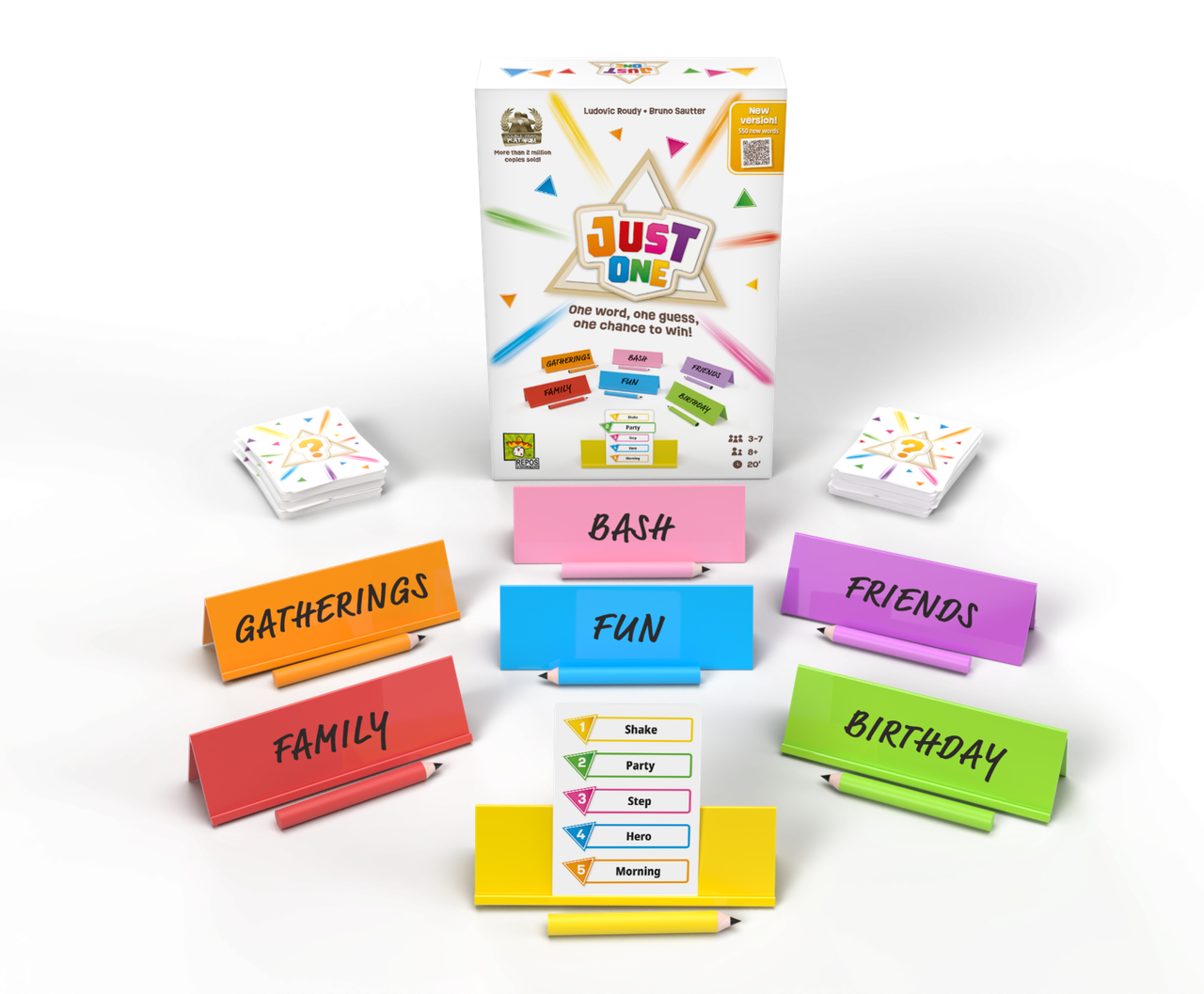
Just One (Asmodee) is a cooperative game created by Ludovic Roudy and Bruno Sautter and winner of the Spiel des Jahres 2019. In each round, one player must guess a mystery word while the rest of the group secretly writes a clue to help them, each on their own easel.
The twist that makes Just One special is that, if two or more players provide the same clue, both are canceled and the active player loses that help. This forces the entire group to put themselves in each other's shoes and look for the most original clue possible, which leads to very funny moments when several people think exactly the same thing without realizing it.
We especially like it because it's super easy to explain, works equally well with 3 or 7 players, and being cooperative, it removes the pressure of competition: you win or lose as a team, which makes it a perfect option to break the ice at any of our meetups.
Just One
Secret Hitler
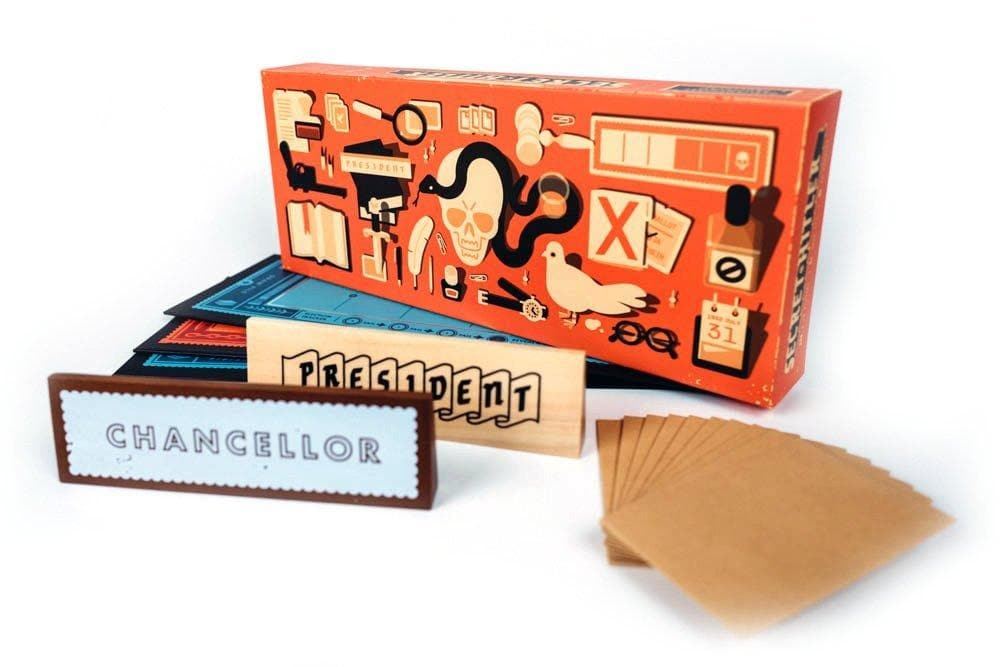
Secret Hitler (no Spanish publisher; Creative Commons licensed edition at secrethitler.com) is a social deduction and hidden roles game set in Weimar Germany, in which a group of liberals must identify and stop fascist infiltrators in the government before it's too late, while the latter try to go unnoticed.
Since there's no Spanish publisher, if you want to have your own copy at home, the most common option is to get the English edition on Amazon or similar stores. At KLEFF, however, we sometimes play with a 3D-printed version, as Secret Hitler is published under a Creative Commons license: this allows for completely legal homemade copies of the game, and on its official website, you'll find all the necessary files and details to do so.
It's a game for 5-10 players that generates discussions, cross-accusations, and tremendous moments of tension: one of those titles that people keep talking about and analyzing on their way home after the game, and which works especially well when there's already some trust in the group.
Secret Hitler
Dixit
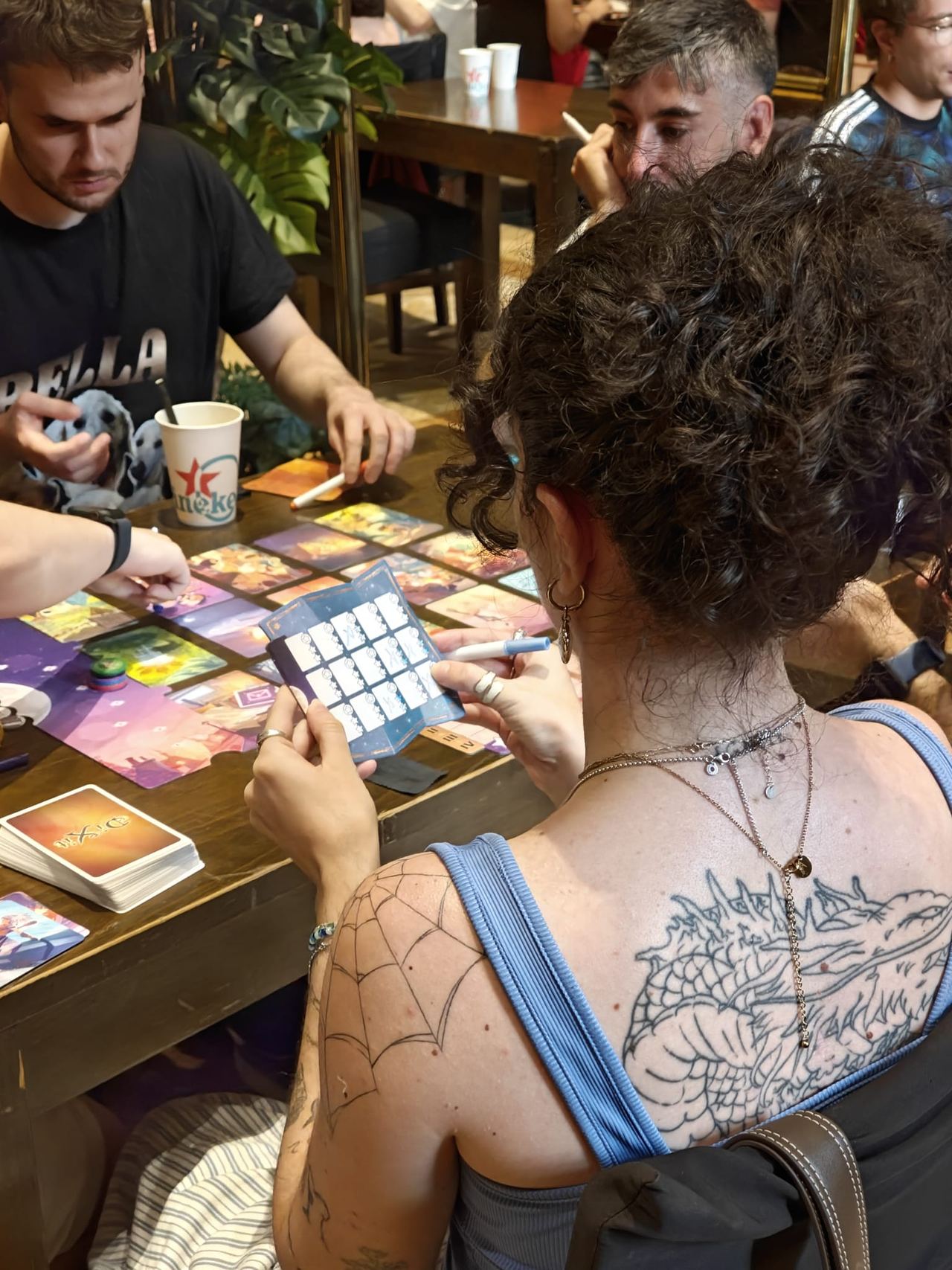
Dixit (Libellud, an Asmodee group imprint) is a game of creativity and visual storytelling in which, in turns, a player chooses a card from their hand with an illustration and gives a clue about it (a word, a phrase, or even a sound) so that the rest try to identify it among several similar cards.
The trick is in the balance: if you give too obvious a clue, everyone will guess your card and you won't score points; if it's too cryptic, no one will, and you won't score either. The goal is for only some players to guess correctly, which turns each round into an exercise in subtlety and interpretation of how others think.
It's a beautiful, relaxed game with no complicated rules or time limit, with such evocative illustrations that every game plays out differently depending on who's playing. That's why it holds up very well to replayability at our meetups, even for those who have played it many times. Perfect for casual players who want to play something simple without complicated rules.
Dixit (Stella)
Codenames
Codenames (Devir) is one of the most awarded and played word deduction games in the world, winner of the Spiel des Jahres 2016. Two teams compete to find all their secret agents on a board of 25 words, based on single-word clues given by each team's spymaster, avoiding pointing to rival agents or, worse still, the assassin.
In our game library, we also have its variant Codenames: Pictures, which replaces words with open-to-interpretation illustrations. This version works especially well in multilingual groups like ours, as it reduces language dependency without losing any of the charm of the original game.
We like Codenames so much that in July 2026 we organized our first doubles tournament in Barcelona, with 14 pairs competing in three rounds and a final that was decided in the last game. You can read how it went in the tournament report, and stay tuned because we are already preparing the next edition.
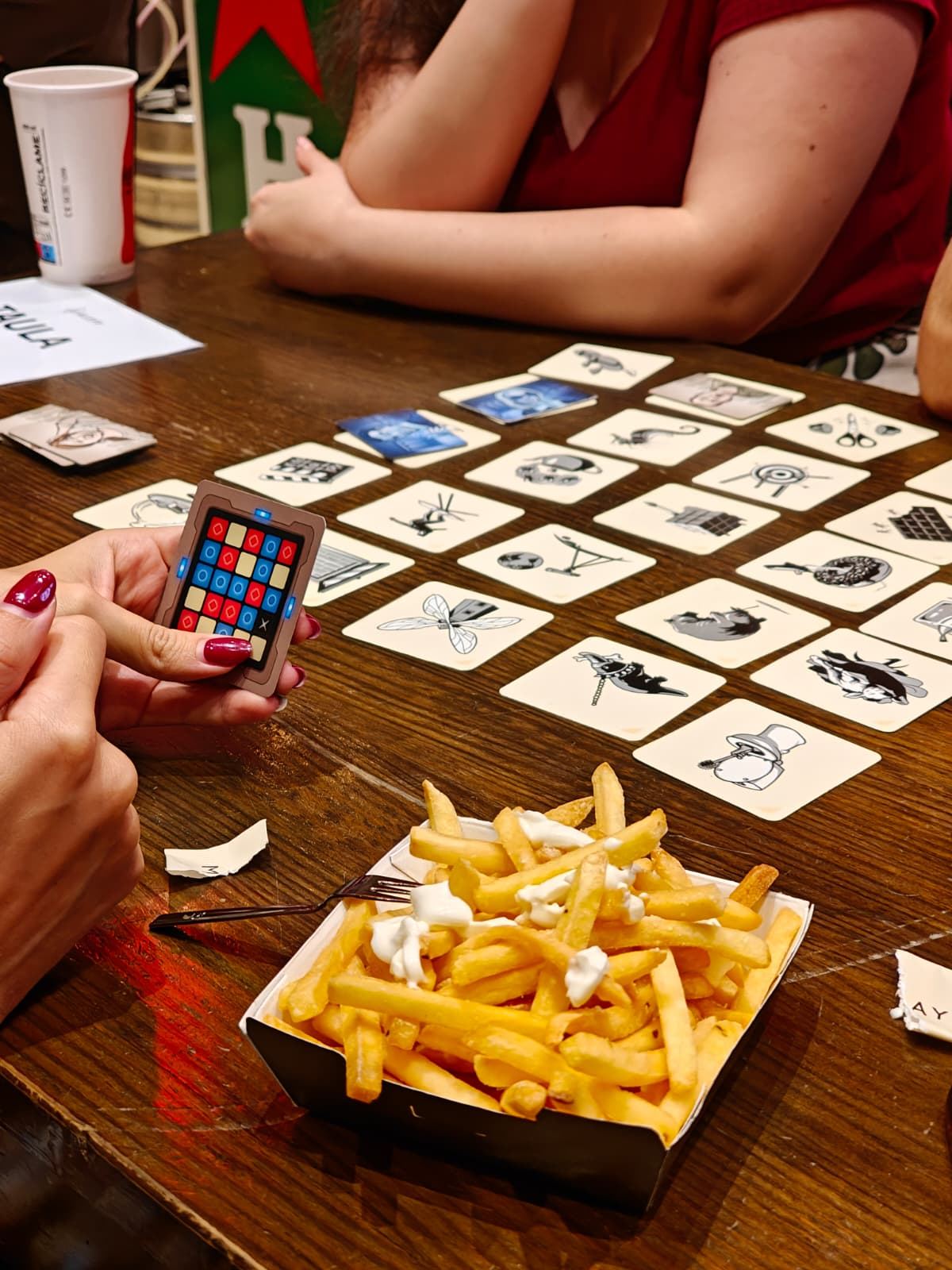
Codenames
Ito
Ito (Maldito Games) is a cooperative game inspired by the Asian legend of the red thread of destiny, in which each player secretly receives a card with a number from 1 to 100 and must give a clue related to the round's theme, so that, by listening to everyone's clues, the group manages to order those numbers from smallest to largest without knowing them.
The interesting thing is that there are no turns or fixed order to speak: the group must negotiate among themselves, based on very subjective clues, where each one thinks they fit, which leads to justifications as surreal as they are funny when someone gets the order wrong.
It's a game that works very well with large groups, requires hardly any explanation, and usually generates immediate empathy and complicity among players who may have just met, something that fits perfectly with the spirit of our meetups.
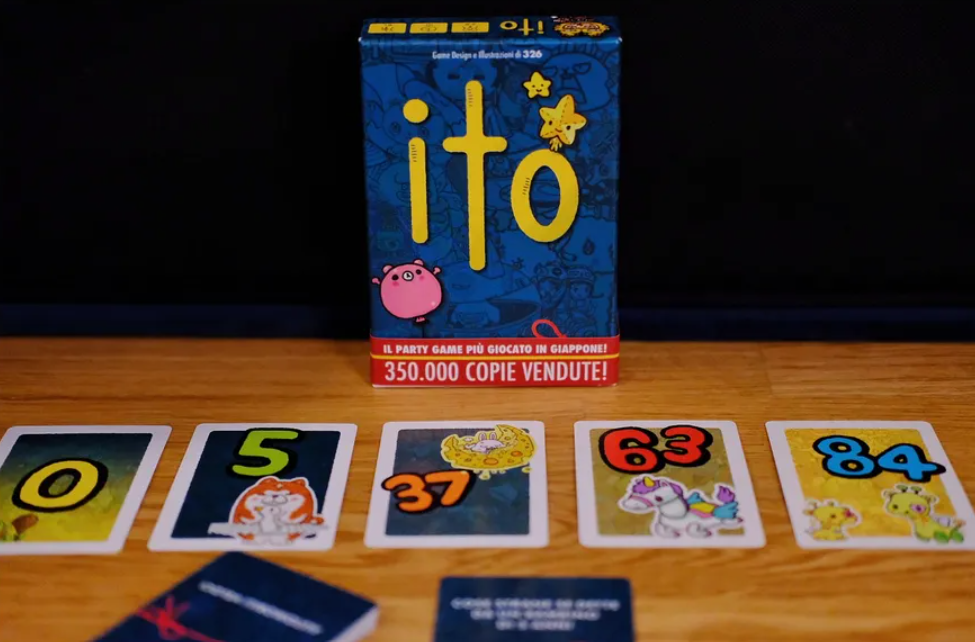
"Ito", the most played party game in Japan. Original photograph by Fabio Mancini (BoardGameGeek)
Top Ten
Top Ten (Cocktail Games) is a cooperative social game in which each player secretly receives a number from 1 to 10 and must give an answer to a proposed theme (for example, from the least useful to the most useful object in a shipwreck) whose intensity corresponds to that number.
Once everyone has answered, one of the players acts as the Captain and must try to order all the answers from the lowest to the highest number, based solely on what they have heard. If they get the order right, the whole team wins.
We love it as an icebreaker because it forces you to truly listen to the rest of the group, and it leads to conversations, anecdotes, and answers that are as witty as they are revealing about how each person thinks, even among people who already know each other from other meetups.
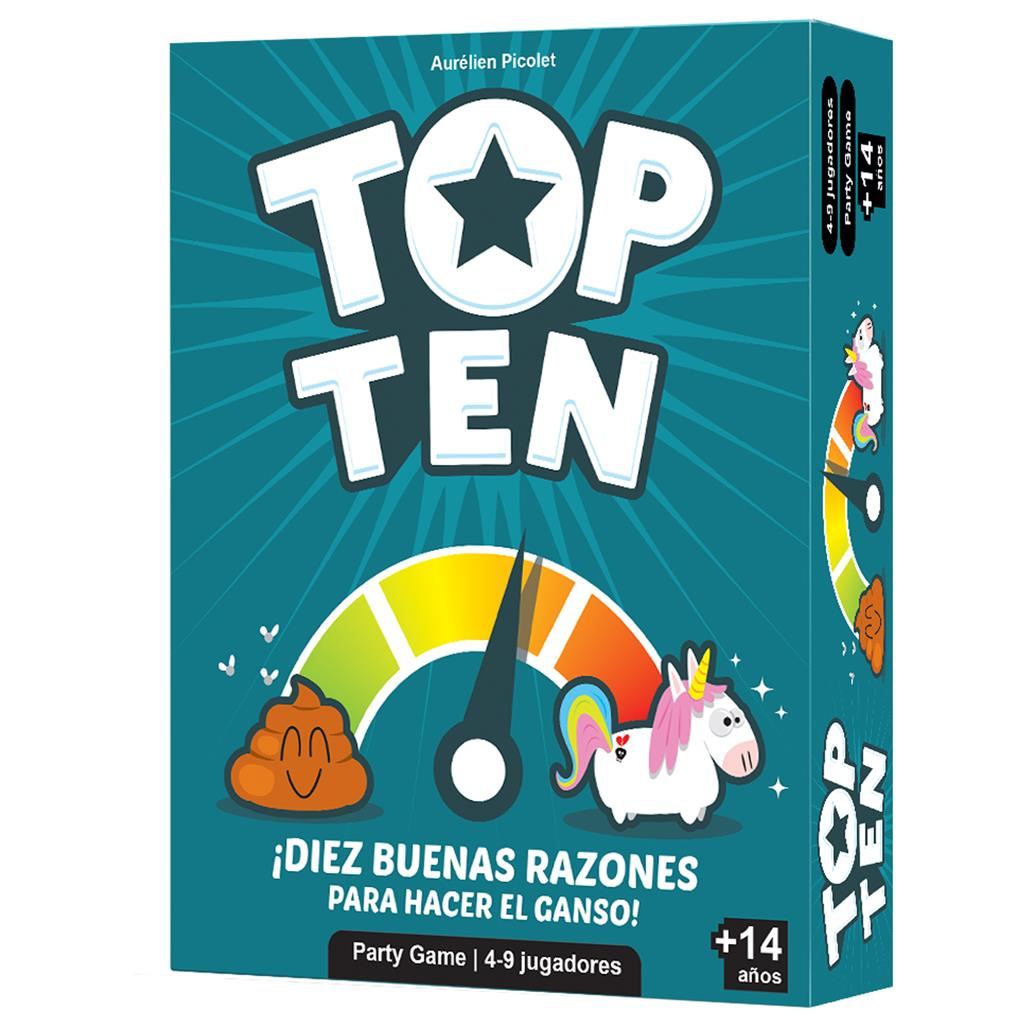
Top Ten
Wavelength
Wavelength (Arrakis Games) is a social guessing game in which two teams compete to "read each other's minds." One player, the Psychic, knows the exact point on a spectrum between two opposing concepts (for example, "Rough – Smooth" or "Fantasy – Science Fiction") and must give a single clue for their team to guess where that point is by turning a dial.
The key is to calibrate the clue: neither too literal that it's too obvious, nor too personal that no one else understands it. The closer the dial gets to the exact point, the more points the team scores, and the rival can also score additional points if they guess which side of the center the target actually was.
It's one of those games that brings out how well (or badly) you know each other among teammates, and it almost always ends in very funny discussions about what exactly each clue referred to, making it a party game perfect for after-dinner conversations.
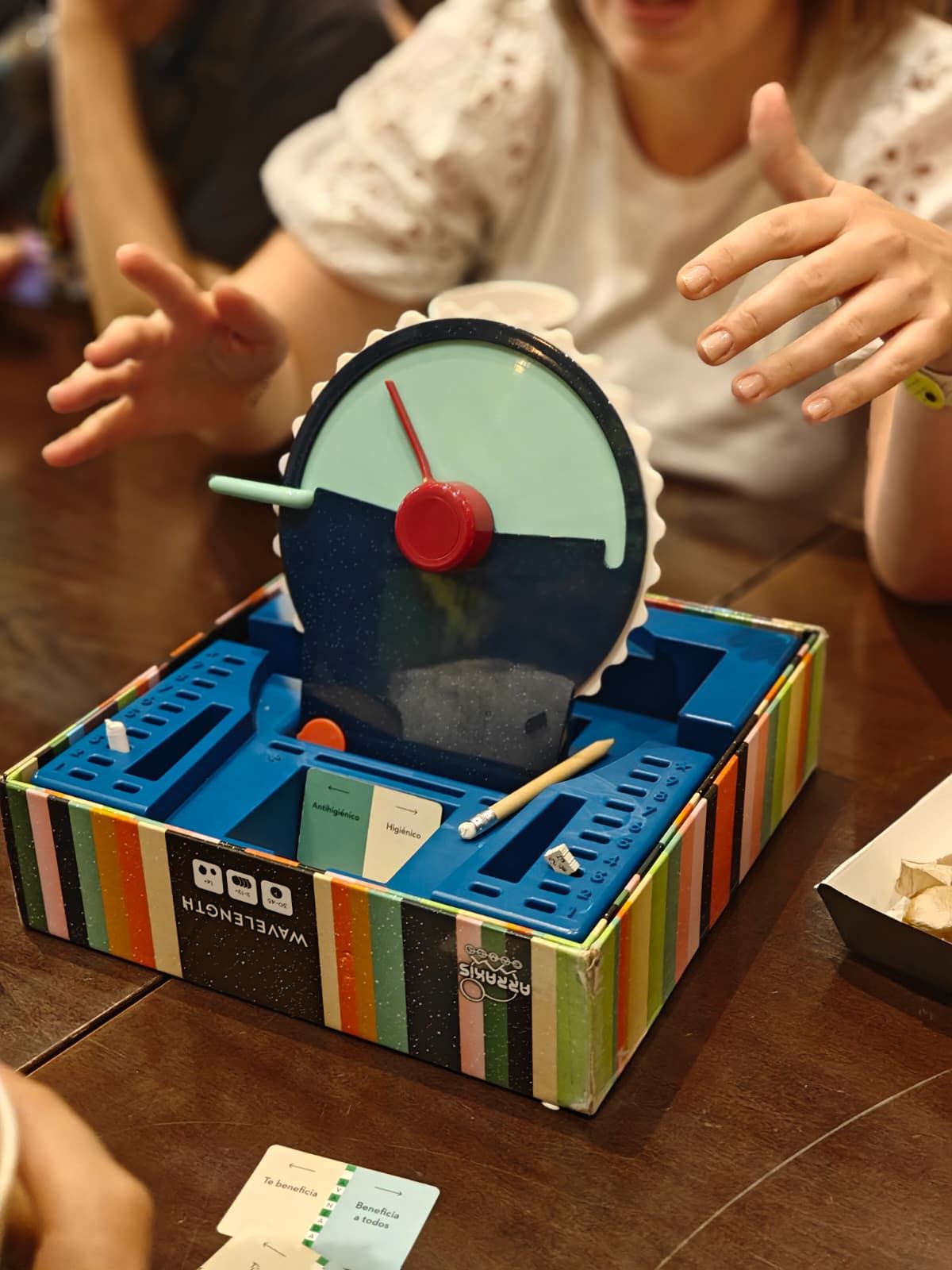
Wavelength
One Round?
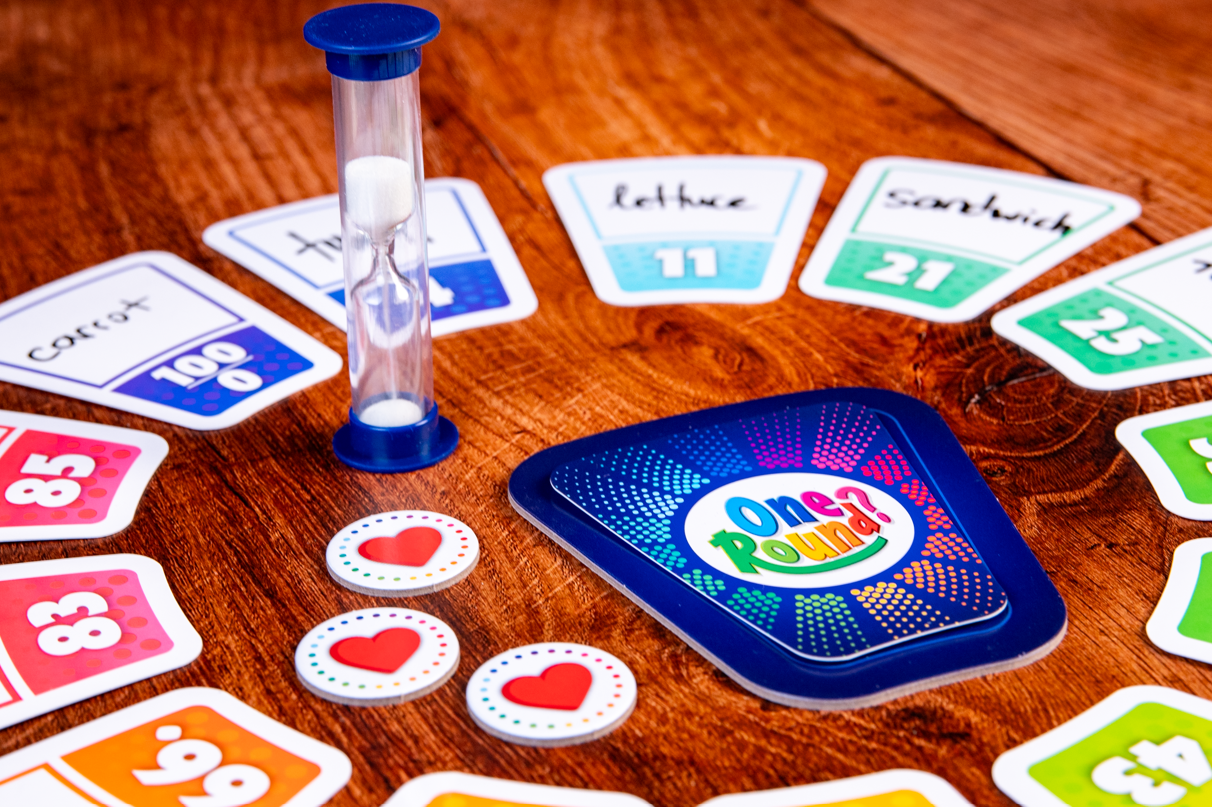
One Round? (Devir) is a recently released and already very successful cooperative word party game, in which you have to complete a circle of one hundred numbered squares by placing words in the correct spot, so that the entire circle makes sense and is ordered.
The challenge is that, to fit a new word into the circle, you have to take into account the words that other players have already placed, always looking for a term that logically fits between two existing ones without leaving impossible-to-fill gaps later on.
We like it because it's super fast to learn, accommodates up to 12 players, games only last 15 minutes, and each game is different thanks to the creativity of each group in placing the words, making it perfect for playing several rounds in a row.
One Round